If you've looked at almost any male vitality or "circulation support" supplement, you've probably seen L-Arginine and nitric oxide mentioned together. It's one of the more mechanistically well-understood parts of supplement science — even if the marketing around it sometimes oversimplifies things. Here's what's actually going on.
Quick Answer
L-Arginine is an amino acid the body converts into nitric oxide, a molecule that signals blood vessels to relax and widen (vasodilation), supporting healthy blood flow. Beet Root extract works toward a similar end goal through a different pathway — natural dietary nitrates. Together, they're two of the most common "circulation support" ingredients in vitality formulas.
What L-Arginine Actually Is
L-Arginine is an amino acid — a building block of protein — that the body uses as a direct precursor to nitric oxide (NO). This isn't a fringe theory; it's well-established biochemistry studied for decades, including in cardiovascular research.
How Nitric Oxide Affects Blood Flow
Nitric oxide is a signaling molecule that tells the smooth muscle in blood vessel walls to relax. When that happens, blood vessels widen (a process called vasodilation), which can support healthy blood flow and may help ease the workload on the heart. This mechanism is well documented in cardiovascular research and is also the basis for why L-Arginine is studied in the context of blood pressure support and exercise performance.
Beyond Blood Flow
Research on arginine supplementation has also looked at its role in immune function, wound healing and fertility, since nitric oxide is involved in a wide range of physiological processes beyond circulation. Some studies have specifically examined arginine in the context of mild erectile difficulty, given the role blood flow plays in that process — though L-Arginine is not positioned as a treatment for clinical erectile dysfunction, and results in this area are mixed.
How Beet Root Fits In
Beet Root (Beta vulgaris) takes a different route to a related outcome. It's naturally rich in dietary nitrates, which the body can convert into nitric oxide through a separate pathway from the one L-Arginine uses. This is part of why beet root and beet juice are commonly studied in athletic and cardiovascular research — as a food-based way to support the same nitric oxide system from another angle. Formulas that combine L-Arginine with Beet Root extract are essentially targeting nitric oxide production from two complementary directions.
What the Evidence Says — and Doesn't
The underlying biochemistry (arginine → nitric oxide → vasodilation) is well established. What's less settled is exactly how much of a real-world, day-to-day difference oral supplementation makes for a healthy adult who isn't dealing with a diagnosed circulation issue — research findings here are genuinely mixed, and individual response varies. It's a good example of an ingredient where the mechanism is solid science, but the size of the practical effect is still being studied.
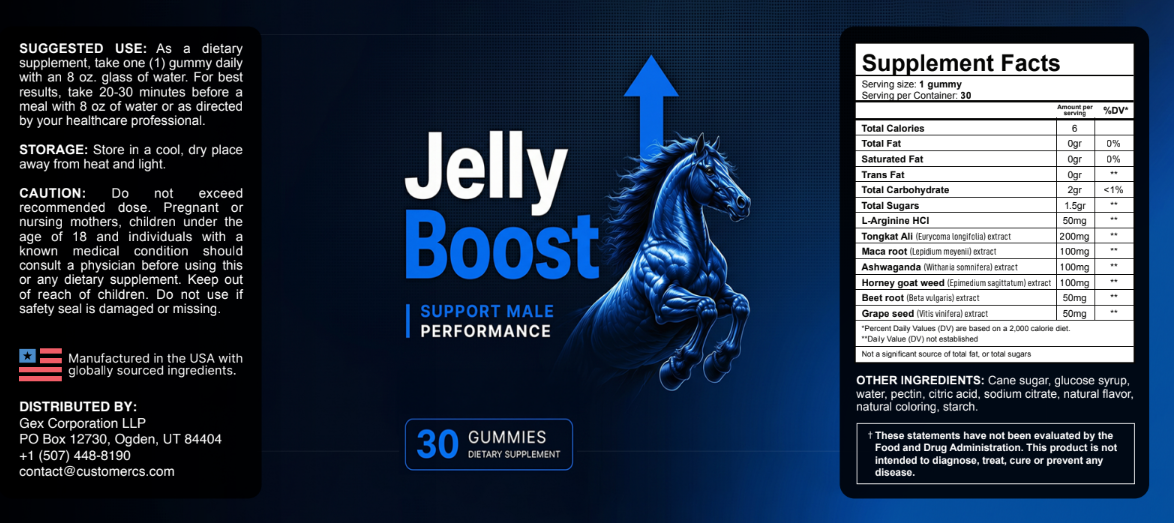
L-Arginine & Beet Root In JellyBoost
JellyBoost includes 50mg of L-Arginine HCl and 50mg of Beet Root extract per gummy, alongside five other active ingredients. See the full label and every amount on the JellyBoost landing page.
View The Full JellyBoost FormulaFrequently Asked Questions
Is L-Arginine the same as nitric oxide?
No — L-Arginine is an amino acid the body converts into nitric oxide. Nitric oxide is the actual signaling molecule that affects blood vessels.
Can I get L-Arginine from food?
Yes, it's found in protein-rich foods like meat, dairy, nuts and seeds. Supplements provide a more concentrated, measured dose.
Why combine L-Arginine with Beet Root?
They support nitric oxide production through two different biological pathways (amino acid conversion vs. dietary nitrates), which is why some formulas include both rather than just one.
This article is for general educational purposes only and is not medical advice. It summarizes publicly available research on L-Arginine and Beet Root as ingredients and is not a claim about the clinical effect of any specific finished product, including JellyBoost. These statements have not been evaluated by the FDA. Consult a healthcare professional before starting any new supplement.