Ashwagandha (Withania somnifera) is one of the most widely studied adaptogenic herbs on the market, and it shows up in everything from sleep gummies to male vitality formulas. Traditionally used in Ayurvedic medicine for centuries, it's now backed by a growing body of modern clinical research — much of it focused specifically on stress, sleep and hormonal health in men.
Quick Answer
Ashwagandha is an adaptogen — a category of herbs traditionally used to help the body handle stress. Clinical research in men has linked standardized ashwagandha extract to reduced cortisol, improved sleep quality, and in some studies, higher testosterone and DHEA levels. Most positive results come from studies lasting 8 weeks or longer.
What Is an Adaptogen?
"Adaptogen" is a term used for a class of plants believed to help the body maintain balance under physical or mental stress, rather than targeting one specific symptom. Ashwagandha is one of the most researched adaptogens, alongside herbs like rhodiola and ginseng.
Stress and Cortisol
This is ashwagandha's best-documented area of research. Multiple controlled studies have measured cortisol — the body's main stress hormone — before and after several weeks of ashwagandha supplementation, and a number of them report meaningful reductions. Some research in men has also observed changes in luteinizing hormone (LH) and follicle-stimulating hormone (FSH), which are connected to the body's broader stress-hormone response.
Testosterone and Fertility Markers
A number of studies in men — including research in both athletic populations and older men with mild fatigue — have reported increases in testosterone and DHEA after 8 or more weeks of ashwagandha use. Some smaller studies have also looked at semen quality and antioxidant markers in men being evaluated for fertility, with generally positive findings. As with most single-ingredient research, sample sizes are modest and more independent replication is useful.
Sleep Quality
Ashwagandha is one of the few adaptogens with reasonably consistent research support for sleep. Several trials have found improvements in sleep quality, sleep efficiency and total sleep time, with the most noticeable benefits reported among people who started with poor sleep or mild insomnia.
Physical Performance and Recovery
Some research in physically active men has linked ashwagandha supplementation to faster recovery after exercise and modest reductions in body fat percentage, potentially connected to its effects on cortisol and testosterone balance. Not every study in this area shows a measurable difference, so results should be considered directional rather than guaranteed.
Typical Dosing in Research
Clinical studies on ashwagandha most often use 300–600mg of a standardized root extract per day, taken for 8 weeks or longer. Effects tend to build gradually rather than appear immediately.
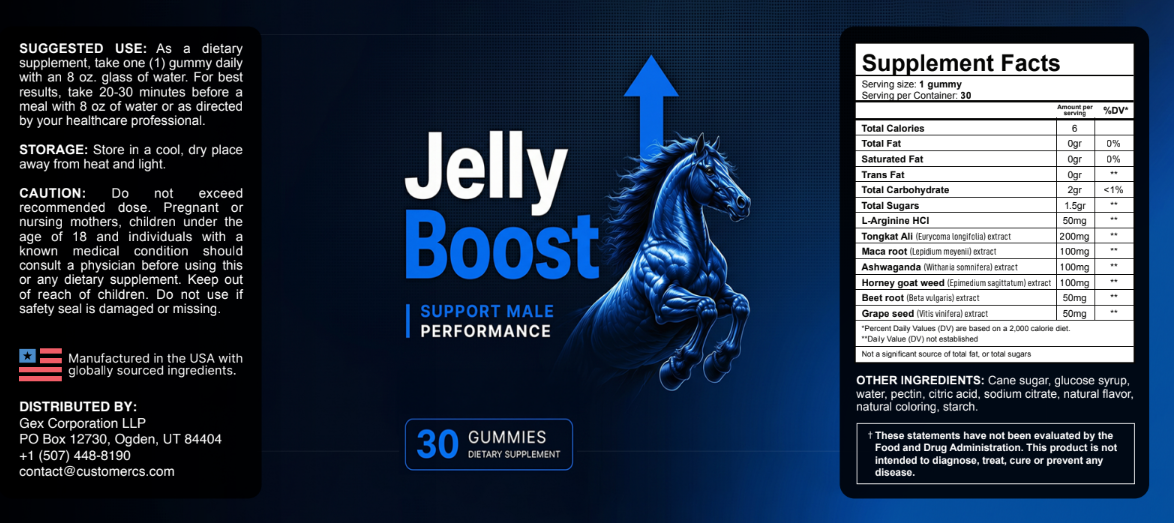
Ashwagandha In JellyBoost
JellyBoost includes 100mg of Ashwagandha (Withania somnifera extract) per gummy, alongside Tongkat Ali, Maca Root and four other active ingredients. See the full label on the JellyBoost landing page.
View The Full JellyBoost FormulaFrequently Asked Questions
Is ashwagandha safe to take every day?
Research generally supports short-term daily use in healthy adults, but talk to a doctor before using it beyond a few months or if you have a medical condition.
Does ashwagandha make you sleepy?
Some people report mild drowsiness, especially at higher doses, which is part of why it's often studied for sleep support. Individual response varies.
How is ashwagandha different from Tongkat Ali?
Ashwagandha is primarily studied for stress and cortisol balance, while Tongkat Ali's research focuses more directly on testosterone and stamina. Many vitality formulas, including JellyBoost, include both for complementary support.
This article is for general educational purposes only and is not medical advice. It summarizes publicly available research on ashwagandha as an ingredient and is not a claim about the clinical effect of any specific finished product, including JellyBoost. These statements have not been evaluated by the FDA. Consult a healthcare professional before starting any new supplement.